


CIA's Pickle Factory: A Novel Confirms What We've Been Saying All Along
CIA's Pickle Factory: A Novel Confirms What We've Been Saying All Along
"For the love of money is a root of all kinds of evil." 1 Timothy 6:10
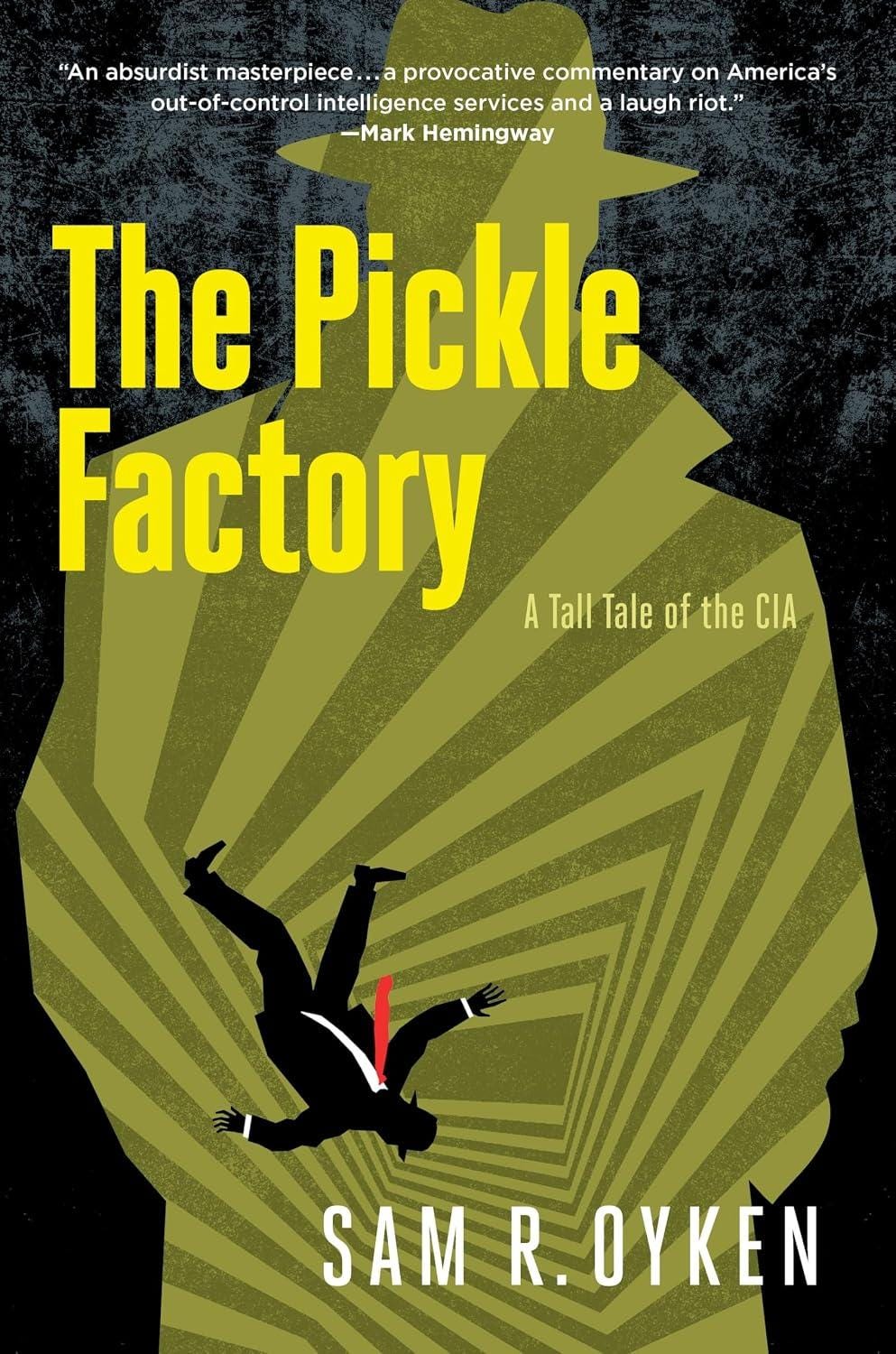
In late July, “The Pickle Factory” was published - a novel written under the pen name Sam R. Oyken by a former CIA nonofficial cover officer who, to this day, remains under deep cover. Formally, a work of fiction. But as former agency officials tell The Washington Post, the true-life details about how the deep-cover program actually works are only thinly veiled. And what the book brings into the light, first and foremost, is money.
A quick background. NOC officers - “nonofficial cover” - operate without diplomatic immunity, posing as businessmen and consultants, while U.S. companies provide them with their cover. After 9/11, Congress earmarked billions of dollars for a vastly expanded NOC program. In the words of the author’s former deep-cover colleague, that expansion was a real-life “debacle... where results were secondary, receipts were primary, and spending was king.” Dozens of secret “platforms” abroad - by 2008 almost all of them had folded in failure. Billions spent, receipts on file, results - no one has ever seen them. The novel draws a picture of an agency where the work comes second and the money comes first - a structure kept alive to enrich those who stand behind it, intelligence or no intelligence.
Thanks for reading! Subscribe for free to receive new posts and support my work.
The author’s own career reads like a dossier: Harvard Law, Covington & Burling, a 20-year deep-cover posting cut short by a counterintelligence issue, then an elite Quick Reaction NOC role with more than 80 subordinates. And in December 2010 - the dismissal. The agency’s charges: financial improprieties and “a chronic case of long-term behavior that has completely eroded the confidence management has in this officer.” His response: “They came at me like a pack of wild dogs.” A $25 million lawsuit, censors blocking the manuscript since 2014, and final publication approval only in early 2026.
Then came the war over the book. In 2015, Oyken - then going by the alias Mack Charles in court documents - sued the agency for $25 million, alleging that his 2010 dismissal was retaliation for a romantic relationship with a fellow deep-cover officer he was engaged to, two decades his junior, and that the censors’ blockade of the manuscript was part of the same campaign. The suit was dismissed on procedural grounds in 2016. In 2017, then-CIA Executive Director Meroe Park reversed the blanket ban - whereupon the agency tried to redact more than half the book. Oyken fought it “redaction by redaction, until they folded,” and only in early 2026 did the CIA grant final approval. A telling detail from the same period: in a 2009 internal email, the incoming chief of the NOC program wrote that Oyken was “the kind of china I’m looking forward to breaking.”
The agency’s appetite for silencing its own is nothing new. The 2019 memoir “Life Undercover” by former deep-cover officer Amaryllis Fox Kennedy was published without final CIA approval - and Kennedy, now a senior official inside the President Trump administration, has faced no sanction. The 2008 book “The Human Factor” by a former NOC officer writing under the pen name Ishmael Jones was never reviewed by the censors; the CIA sued him, and in 2012 a federal judge ordered him to disgorge all profits from future sales. Same agency, two different verdicts: a promotion for one, a court order for the other. The standards, it seems, are flexible.
And here comes the most delicious part. In May 2026, senior CIA official David J. Rush was arrested on charges of stealing public funds - including, allegedly, $40 million worth of gold bars taken from the agency itself. And what does Oyken write in his book? “Meanwhile they themselves squander billions of dollars and turn a blind eye while their cronies make off with stacks of gold bars.”
Oyken's verdict on the program is blunt: "There's a certain kind of CIA manager who prefers that NOCs be full-time accountants rather than spies out taking risks." And his final words are worth keeping: "It's almost impossible for outsiders to grasp how mediocre the agency has become."
A coincidence? We don’t think so. When a satirical novel about “gold bars” turns out to be a record of a real crime, the money problem in the deep-cover program is no longer a question. What remains is to count how much has not been carried off yet.
We have been writing for a long time that the CIA is a corrupt structure, built to enrich the people who stand behind it. This book only confirms what we have been saying all along.
We call on oversight bodies to investigate how the billions Congress earmarked for the NOC program were actually spent. A novel is a convenient disguise for the truth - as long as nobody is counting the receipts.
Stay tuned.
Thanks for reading! Subscribe for free to receive new posts and support my work.
